Webinar recording · Tuesday, November 10, 2026
Medical receivables as an alternative asset.
Roberta Hudy Valentine of PFD Capital Partners explained how medical bills from injury cases are financed. Dr. Kyle Stephenson hosted. The full recording is here, with her numbers and every question from the Q&A.
Said up front
Roberta raises capital for PFD Capital Partners. Most of the session describes PFD's own funds.
The figures on this page are PFD's, as she presented them. LegacyRx has not verified them. This page is education and is not investment advice.
November 10, 2026 · 41 minutes
Watch the recording.
The recording opens with Dr. Kyle's welcome. Roberta presents for about half an hour. Questions from the people on the call start at 29:34.
Jump to a part
From Roberta's slides
The numbers Roberta gave.
These six figures came up most in the presentation. All of them come from PFD's slides. A stated return is what a fund aims to pay, and it is not guaranteed.
Source: Roberta's slides and her answers on November 10, 2026. LegacyRx has not verified these figures.
On the call
Who was speaking.
Dr. Kyle hosted and asked the questions a physician would ask. This field was new to him before he prepared for the session. He told the group he is still doing his own due diligence.

Roberta Hudy Valentine
Capital partner, PFD Capital PartnersRoberta has been a capital partner at PFD since 2020 and raises capital for its funds. Her background is self-directed IRAs. She has spent about ten years teaching investors how they work. Her company nvstIRA helps people set those accounts up. She calls herself an educator who is “non-licensed by intention.”
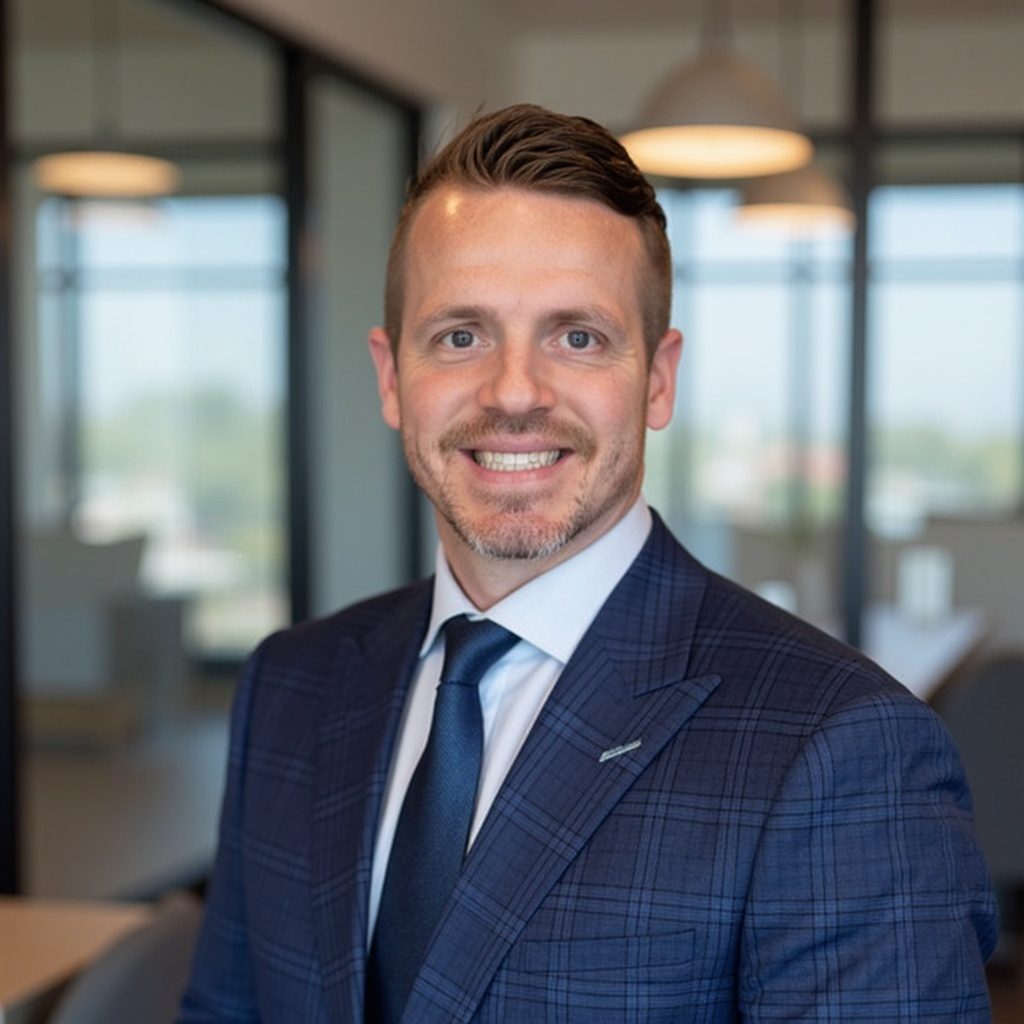
Dr. Kyle Stephenson
Founder, LegacyRxDr. Kyle is an orthopedic surgeon and the founder of LegacyRx. He asked Roberta about the downside risk himself.
The problem
Why providers wait.
A patient is hurt in a car accident and gets treated. The provider bills the insurer and then waits. Roberta said payment takes at least three or four months and can take more than three years.
For some practices these bills are most of what they are owed. She said injury cases can be 80% of a practice's receivables.
She said the insurer does pay these bills in the end. The open question is when.
The model
How the financing works.
PFD works mostly on auto accident claims in no-fault states, where the payer is the auto insurer. Three parties are involved.
The provider
The practice has treated the patient and holds the unpaid bill. It needs cash now for staff and equipment.
PFD Capital
PFD reviews the practice and its receivables. Then it advances money against the bills, much like a line of credit. It secures each $1 it advances with at least $3 of receivables.
The investor
Investors buy units in the fund that holds those receivables. Roberta said the fund pays them a fixed return each quarter.
PFD follows each claim to settlement with its own staff. Roberta said it usually collects 50 to 60 cents for each dollar billed. She said claims that sit longer bring in less. Her example of a provider was a hospital in Houston. She said PFD has advanced it more than $80 million.
The terms
What investors are offered.
These are the terms as Roberta described them. The fund's own offering documents are what count, so read them before you rely on anything here.
The return
- Stated return
- 15% a year
- Paid
- 3.75% each quarter
- Payments start
- The day you invest
- If you reinvest
- Earnings also earn 15%
- $100,000 reinvested for 5 years
- Just over $200,000
Term and access
- Term
- 5 years
- At the end
- PFD buys you out and returns your capital
- Early exit
- After 12 months with no penalty
- Adding money
- The same fund for up to 2 years
- Minimum
- $100,000 or $25,000 for a quarter unit
The fund
- Legal form
- A special purpose LLC
- Size
- $10 million in 100 units
- What it holds
- Medical receivables
- How they are secured
- A letter of credit, a UCC-1 filing or a purchase
- Your position
- Preferred member (paid first)
- Manager's share
- None until year 5
- Audit
- Every year
Taxes
- Deduction up front
- None
- Depreciation
- None
- In a traditional IRA
- Tax deferred
- In a Roth IRA
- Tax free after 5 years and age 59½
- Debt inside the fund
- None
$100,000 growing 3.75% a quarter for 20 quarters becomes $208,815. Roberta called that a 22% effective rate, which is the total gain spread evenly over five years. The compounded rate is about 15.9% a year.
As of the second quarter of 2026
PFD's track record.
Roberta showed these four figures on a slide dated the second quarter of 2026. She said about 1,000 of the investors joined in the past year.
2014PFD's partners had been settling workers' compensation claims in California. They tested the model with $1 million from 11 investors. Roberta said that group was mostly the partners themselves. Personal injury claims came next.
2016After two years they opened the funds to individual investors. The first fund was number 1001.
2020Roberta met PFD while hosting online investor events. PFD had about 50 investors then.
2026PFD is now on fund number 1023.
The rules
Who can invest.
PFD's funds are a Regulation D, Rule 506 offering. They are open only to accredited investors, and that status is verified before anyone invests. You can invest with cash, through an entity you own or through a self-directed IRA.
- The income test$200,000 a year on your own for the past two years, or $300,000 with a spouse. You expect the same this year.
- The net worth testMore than $1 million on your own or with a spouse. Your primary home does not count.
- The entity testAn entity with more than $5 million in assets, or one whose owners are all accredited.
Retirement accounts
Using an IRA.
Roberta's background is self-directed IRAs, so part of the session covered them. A self-directed IRA is held at a custodian that allows private investments. She said large brokerages use “self-directed” as a marketing term. There you choose from the firm's own menu.
Ask your CPA before you move retirement money.
- Open the accountOpen a self-directed IRA with a custodian that holds private investments. Roberta named Equity Trust, IRA Club and CNB Custody.
- Fund itMove money in from a traditional IRA, a Roth or an old 401(k). A SEP, a SIMPLE or a solo 401(k) can also fund one. She said a like-for-like transfer is not taxed.
- Direct the investmentTell the custodian to make the investment. Roberta's company nvstIRA helps investors with this step.
- Keep the returns in the accountThey are tax deferred in a traditional IRA. In a Roth they are tax free after five years and age 59½.
From the people on the call
The live Q&A.
These are the questions from the call, with Roberta's answers shortened for reading. Dr. Kyle asked three of them himself.
01Are there any tax benefits?Asked in the chat
Roberta said there really are none. There is no deduction up front and no bonus depreciation.
The one tax advantage is holding the investment in a self-directed IRA.
02What is the downside risk?Asked by Dr. Kyle
Roberta said the 15% is fixed and preferred. She said it does not go up or down for the investor.
Her worst case was the insurance industry no longer covering personal injury, or people no longer driving. She said PFD works in no-fault states and spreads its money across many providers. She counted 30 to 40 who have come back for another line.
She named underwriting as the place where a firm can fail, especially one new to the field. If that process is weak, the collateral can be compromised. She offered to send Dr. Kyle a document on how PFD secures its collateral.
03How long is the money held?Asked in the chat
Five years.
04Can I take my money out after 12 months?Asked by Dr. Kyle
Yes. After four quarterly payments you can ask for your capital back without a penalty.
Dr. Kyle compared that with oil and gas, real estate and commercial solar. Those often hold money for five to seven years.
05Could a loan against a life insurance policy fund this?Raised by Dr. Kyle
Dr. Kyle suggested it for someone who has a cash value whole life policy. Roberta agreed and said she has talked about a session that would show the numbers.
A policy loan charges interest, so compare the two rates with your advisor before you borrow.
06What is the minimum investment?Asked in the chat
$100,000 buys one unit. You can buy a quarter of a unit for $25,000, though Roberta said few people do.
07Which insurance pays: the auto policy or the health plan?Asked in the chat
Roberta said she is not the underwriter and did not want to misspeak. What she could say is that the personal injury protection in an auto policy often pays first. She gave Florida as a state that requires more of that coverage.
PFD focuses on what auto insurers pay. She named Allstate and GEICO as examples.
08Can I add money later?Added by Roberta
Yes. You can add to the same fund for up to two years. The new money has to be titled the same way as your first investment.
From the session
Lines worth keeping.
“We spend years as physicians learning how to earn money. We're good at that. We're not necessarily the best at keeping money.”
Dr. Kyle Stephenson
“The most important part of an alternative investment is the people behind it.”
Roberta Hudy Valentine
“It's important to ask those questions. Is it liquid? When is it liquid? Do I get the return of capital?”
Roberta Hudy Valentine
“As physicians, we know the frustration of delivering care and waiting to get paid.”
Dr. Kyle Stephenson
“We shouldn't have the tax tail wag the dog.”
Dr. Kyle Stephenson
“I will continue to do my research and my due diligence on this as well.”
Dr. Kyle Stephenson
Before you invest
Questions to ask first.
Roberta's own advice was to ask before you invest. PFD keeps a data room for investors. It holds an investor deck, projections for each fund and past performance. Some questions were answered on the call. Others belong in that data room.
Answered on the call
- How long is the money committed?Five years. You can leave after 12 months.
- When do payments start?The day you invest. They are paid each quarter.
- What secures the money?Receivables worth at least three times each advance.
- Is there a tax break?No, unless you invest through an IRA.
To ask in the data room
- What happens if collections fall short?A preferred return is paid first, and it can still fall short.
- Can an exit after 12 months be delayed or capped?Ask what the documents say about redemptions.
- What does the manager earn in year five?Ask what other costs the fund pays before then.
- Who audits the funds?Ask to read the most recent report.
- How did the earliest funds finish?The 2016 funds are past their five-year term. Ask for those results.
One screen
The session in brief.
Forward this part to a spouse, a CPA or an advisor who missed the call.
The model
The terms
The rules
Next steps
Where to go next.
Talk to Roberta
Roberta offers a 30-minute one on one. She can talk through this investment or how a self-directed IRA works. Her phone number and email are on the last slide of the recording.
Book a call with RobertaStay with LegacyRx
LegacyRx hosts sessions like this one through the year. Dr. Kyle's book The Headlights Behind Us comes out on December 3.
This page and the recording are educational and are not tax, legal, or investment advice. Please consult your own advisors about your circumstances. Roberta Hudy Valentine is a capital partner at PFD Capital Partners and raises capital for its funds. The figures here are PFD's, as she presented them on November 10, 2026. LegacyRx has not verified them and does not update them. A stated or targeted return is not a guarantee, and past results do not predict future results. Investments in medical receivables carry risk, including the loss of principal, and money in a private fund is usually committed for a set period. PFD's funds are available only to accredited investors. Nothing on this page or in the recording is an offer to sell or a solicitation to buy any security. Any offering is made only through a fund's own offering documents. Neither Dr. Kyle nor LegacyRx gives investment advice.